Next-Generation Data Platform – Snowflake
Introduction
In the modern digital era, data has become the foundation of innovation and business success. Organizations across industries generate vast amounts of data from customers, applications, devices, and digital platforms. Managing and analyzing this growing data effectively is essential for making informed decisions and staying competitive in the market. This is where Snowflake emerges as a powerful next-generation data platform.
Snowflake is a cloud-native data platform designed to simplify data management while providing high performance, scalability, and security. Unlike traditional data systems that require complex infrastructure and maintenance, Snowflake offers a fully managed environment where organizations can store, process, and analyze data seamlessly.
The Snowflake Data Cloud allows businesses to bring together structured, semi-structured, and unstructured data into a single platform. This unified approach enables teams across departments to collaborate efficiently, generate insights faster, and build innovative data-driven applications. By leveraging the advanced capabilities of Snowflake, organizations can transform raw data into valuable business intelligence and drive long-term growth.
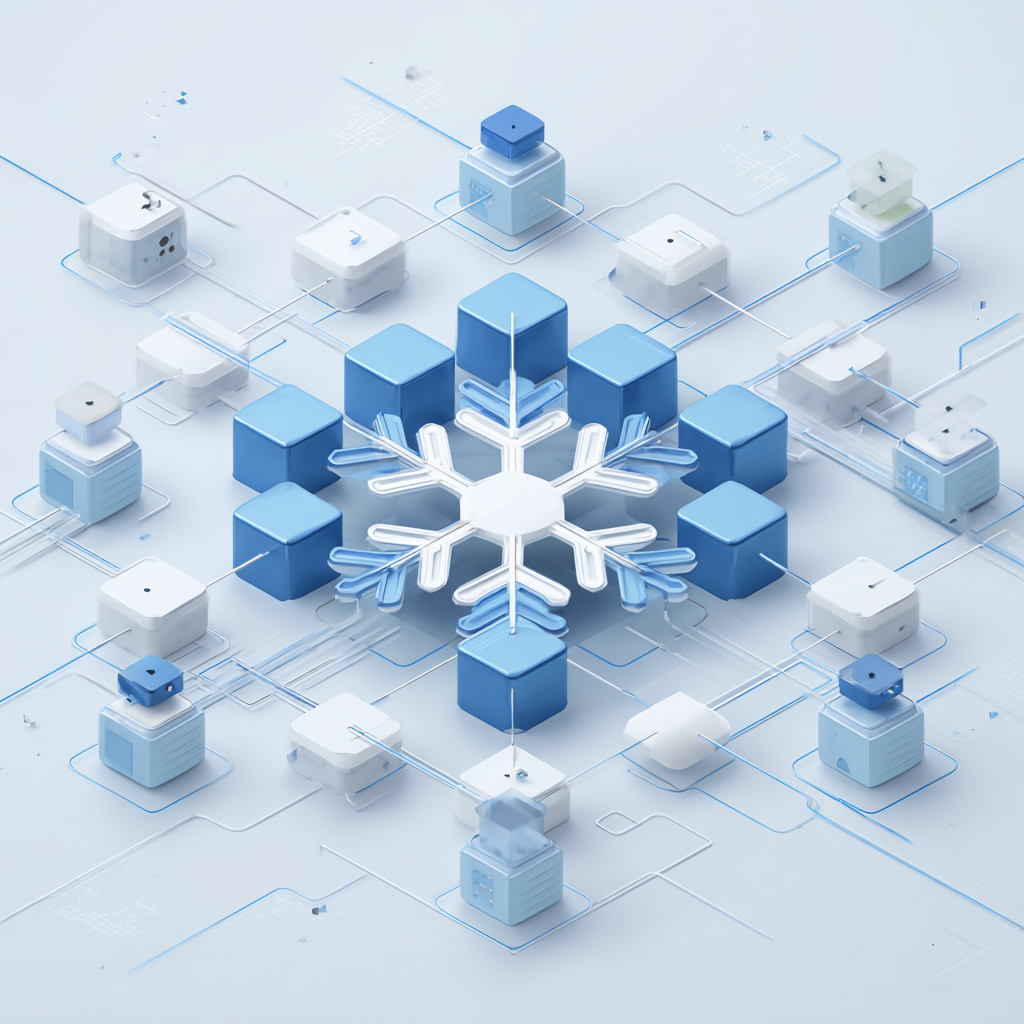
Types of Snowflake Solutions
1. Data Warehousing
Snowflake provides a powerful cloud data warehouse that allows organizations to store and analyze large volumes of structured and semi-structured data. Its high-performance architecture ensures that businesses can run complex queries quickly and obtain insights faster.
2. Data Engineering
Data engineering is a crucial part of preparing data for analytics. Snowflake enables organizations to build efficient data pipelines that collect, transform, and load data from multiple sources. This ensures that data is accurate, reliable, and ready for analysis.
3. Data Lakes
Snowflake supports data lake capabilities that allow organizations to store massive amounts of raw data in different formats. Businesses can manage structured and unstructured data in a unified platform while maintaining accessibility and performance.
4. Data Sharing
One of Snowflake’s most unique capabilities is secure data sharing. Organizations can share live data with partners, clients, and internal teams without copying or moving the data. This feature improves collaboration and simplifies data distribution.
5. Data Applications
Developers can build modern data applications directly on the Snowflake platform. These applications leverage real-time data insights to deliver personalized services, advanced analytics, and better user experiences.
Key Features
Cloud-Native Architecture
Snowflake is built specifically for the cloud, allowing organizations to leverage modern infrastructure without worrying about hardware management or system maintenance.
Separation of Storage and Compute
Snowflake’s architecture separates storage from computing resources. This allows businesses to scale each component independently, improving performance while optimizing costs.
Elastic Scalability
Snowflake can automatically scale computing resources based on workload demands. Organizations can handle increasing data volumes and user queries without performance issues.
Multi-Cloud Compatibility
Snowflake operates across major cloud providers such as Amazon Web Services, Microsoft Azure, and Google Cloud. This flexibility allows businesses to choose the cloud environment that best suits their needs.
High-Performance Analytics
Snowflake is optimized for fast query processing and advanced analytics. Businesses can analyze large datasets quickly and generate insights in real time.
Advanced Security and Governance
Snowflake offers enterprise-grade security features including encryption, role-based access controls, and compliance support to protect sensitive data.
Benefits
Faster Insights and Decision-Making
Snowflake’s powerful analytics capabilities enable businesses to analyze data quickly and generate actionable insights that support strategic decisions.
Cost Efficiency
Organizations only pay for the storage and computing resources they use. This flexible pricing model helps businesses manage cloud expenses effectively.
Improved Collaboration
Snowflake’s data sharing capabilities allow teams and partners to access the same data securely, improving collaboration and productivity.
Simplified Data Management
Snowflake eliminates the complexity of managing traditional data infrastructure, allowing organizations to focus on analytics and innovation.
Scalability for Growing Data Needs
As businesses grow, their data requirements increase. Snowflake’s scalable architecture ensures that organizations can handle expanding workloads efficiently.
Support for Data-Driven Innovation
Snowflake enables organizations to build advanced analytics solutions, machine learning models, and modern data applications that drive innovation and competitive advantage.
Conclusion
In today’s data-driven world, organizations need a modern platform that can handle complex data workloads while delivering speed, flexibility, and security. Snowflake stands out as a next-generation data platform that empowers businesses to manage and analyze their data efficiently.
By combining scalability, high performance, and secure collaboration, Snowflake enables organizations to unlock the full value of their data. With its advanced capabilities and cloud-native design, Snowflake helps businesses innovate faster, improve decision-making, and build a future powered by data.
At Adiantara, clear communication is our priority. Whether it’s our services, your projects, or any support you need, we’re just a message away — always here to help you succeed!